May 13th, 1933

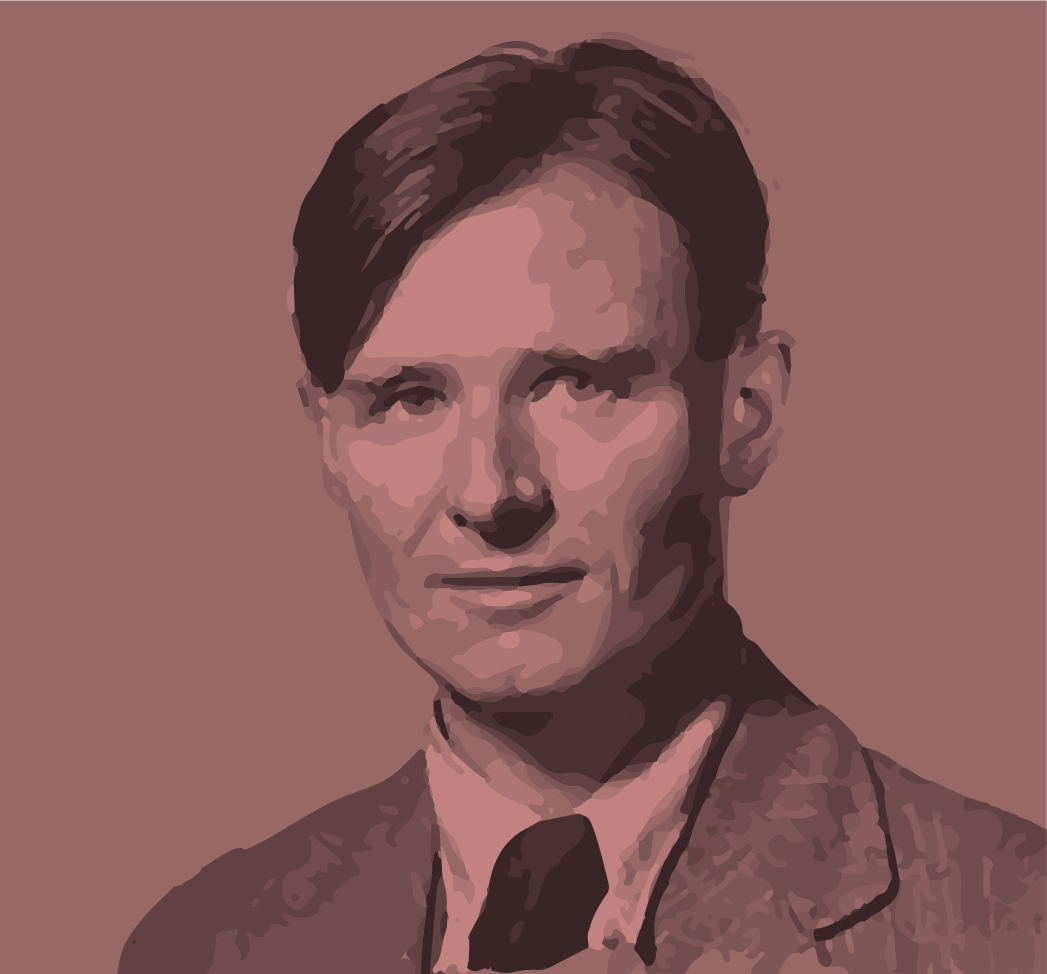
Eighty years ago today, Christopher Isherwood said goodbye to Berlin after four years living, working and documenting life in the city.

Three days earlier he had witnessed the Nazi Youth looting his former lodgings, The Institute for Sexual Science, and the burning of books on the Opera Platz.

Shame” he shouted but not, he later admitted, very loudly.


“May 13, 1933. It is a quarter past midnight and I have just finished packing. In eight hours I am going to leave Berlin, perhaps for ever……. I have already made the journey several times in my head, composed funny postcards to all my friends. And now the day which seemed too good, too bad to be true, the day when I should leave Germany, has arrived, and I only know about the future that, however often and however variously I have imagined it to myself, the reality will be quite different”

Christopher and His Kind  p.133/134

” Not only are we perfectly safe, but we are surrounded by those who aren’t…… On this very train there must be at least a few people in danger of their lives, travelling with false papers and in fear of being caught and sent to a concentration camp or simply killed outright. It is only in the past few weeks that I have fully grasped the fact that such a situation really exists – not in a newspaper or a novel – but here where I have been living”

Down There On A Visit p. 61

He left Berlin and headed for the Greek island of St Nicolas with his new lover, Heinz.

The story continues in ‘Down There On A Visit’ published in 1961.


Posted in History, People | Tagged , , , , , , , , | 1 Comment

Strandbad Wannsee


“Otto was the coming of warmth and color to the drab cold city, bringing the linden trees into leaf, sweating the citizens out of their topcoats, making the bands play outdoors. Christopher rode on the bus with him to the great lake at Wannsee, where they splashed together in the shallow water amidst the holiday crowds, then wandering off into the surrounding woods to find a spot where they could be alone.”

Christopher Isherwood – ‘Christopher And His Kind’


At 1.5 kilometres long and 80 metres wide, Europe’s largest inland Lido, the Strandbad Wannsee has been a much-loved day-trip destination for generations of Berliners. The resort as we know it now owes very much to its Weimar-era heyday but its origins date back a little further than that, to 1907.


(Pic : Strandbadwannsee.de)

Times were hard in Berlin in the early 1900′s and the city’s residents liked nothing more than to escape their cramped, dark living conditions by heading out to the many lakes that surrounded the burgeoning capital. However, laws decreed that men and women bathing within sight of one another was illegal. By 1909, the authorities relented and the ‘Freibad Wannsee’ was created, with one beach each for women and men separated by a family section. An entrance fee was introduced and the whole area surrounded by fencing to discourage casual onlookers.

After the First World War, and with the ownership of the beach now transferred to the City of Berlin, the resort thrived. Temporary tented structures were replaced by thatched pavilions and the toilets and changing facilities greatly improved. The beach was now open all-year round and with the arrival of the railway, visitors topped the 900,000 mark in 1927.

The facilities were now completely overwhelmed and plans were drawn up in 1926 to erect permanent buildings at the beach. City architects Martin Wagner and Richard Ermisch were given the task of transforming the site. By the summer season of 1930, the construction of the newly named ‘Strandbad Wannsee’ was complete but the financial situation had led to the original 5 million Reichsmark budget being scaled back to 2 million Reichsmark. Attendances were now at record levels, with Berliners eager to enjoy their new city beach.


(Pic: Bundesarchiv)

The onset of National Socialism in the early 1930′s, saw signs being erected banning Jews from the beach, although these were removed in time for the 1936 Olympics, only to be replaced in 1938. The Nazi party would only employ their own party members as staff for the resort and the only entertainment on offer was provided by bands of the Wehrmacht and the SA.

However, during the Second World War, the beach provided much-needed respite for those citizens of Berlin that were allowed to use it and with the buildings escaping the bombing, annual attendances reached 425,000 in 1944 and 615,000 by 1947. On June 1st of that year, an all-time record 51,000 people came to Stranbad Wannsee.

In 1951, the beach was featured on a hit song ‘Pack die Badehose ein’ (Pack the swimming trunks) sung by Die Kleine Cornelia – the 8 year-old incarnation of the soon-to-be hugely popular German singer Conny Froboess. She went on to represent Germany in the 1962 Eurovision Song Contest.


The beach has only rarely been closed in its time and in 2004, now under the management of the Stiftung Denkmalschutz Berlin, a comprehensive restoration and refurbishment project was undertaken. The entire area is now a listed historical site.


(pic: Alex Mauruszat)


(Pic: Alex Mauruszat)

The beach is now 355,000 sq metres and can accommodate up to 30,000 people at a time.

Ten percent of the area is dedicated FKK (nudist), there are also beach volleyball facilities, a football area, boat rental and a children’s playground. There are also a plethora of cafes and bars to choose from.

A day ticket to the beach is €5 but, as this picture from the 2013 season opening-day shows, it may be a while before you ‘Pack die Badehose ein’ this year.


(Pic: welt.de)

Posted in History | Tagged , , , , , , , , , , | 2 Comments

Siegfried Arno – ‘The German Charlie Chaplin’

The extraordinary career of Hollywood star Sig Arno is mostly remembered through the 150 films he appeared in from 1921 to 1962, but his roots in the cabaret scene of Weimar Berlin is a lesser told story.

Born Siegfried Aron in Hamburg in December 1895, he attended the Talmud Torah school before training as a fashion designer at the Hamburg School of Applied Arts. He made his stage debut at the Stadttheater Harburg  and also performed in Hamburg and Prague before moving to Berlin with his younger brother Bruno, in 1921.

They took neighbouring apartments at Zähringerstraße in the Charlottenburg district of the city, a few doors along from Anita Berber and her family.

His first film role came almost immediately when in 1921 he appeared alongside his younger brother in ‘Die rote Katze’. A year later he married for the first time, to actress Lia Dahms, and had a son, Peter, in 1926.

The tall, thin, awkward-looking performer soon formed a double-act with the burly comedian Kurt Gerron and as ‘Beef and Steak’ they were regulars at the Kürfurstendam cabaret of comedians, the KaDeKo.

Comparisons immediately started to be drawn with other stage and silent movie performers of the time and his signature role soon became that of the sad-faced misfit.

Film roles kept on coming – fifteen in 1926 alone – but  Siegfried maintained his commitment to stage and cabaret work and, in 1930, was cast in the premiere of the acclaimed revue ‘Im weißen Rößl’ (The White Horse Inn) at Berlin’s  Großes Schauspielhaus, alongside Max Hansen and Camilla Spira.

By 1930, Siegfried was regularly being referred to as the ‘German Charlie Chaplin’

In 1933, like so many others, he fled Germany and worked in cabarets across Europe including an extended spell with fellow KaDeKo performer Willy Rosen’s ‘Theater der Prominenten’ troupe in the Netherlands, reunited with his double-act partner Kurt Gerron.


His first marriage had ended in divorce and in 1934 he married his second wife Barbara Kiranoff.  He made just two films over the next six years, ‘Gado Bravo’ in 1934 and his debut as a director in ‘De roem van’t regiment’ in 1936.

The lure of Hollywood proved too strong and Siegfried arrived there in 1939, making three films that year including ‘The Hunchback of Notre Dame’. The following year, he appeared alongside Charlie Chaplin in ‘The Great Dictator’.

Over the next fifteen years, and now known as Sig Arno, he proved to be one of the most high-profile of the European emigrants to America, appearing in plays, operettas and revues in New York, San Francisco and Los Angeles. He was nominated for the ‘Best Featured Actor in a Play’ at the 1958 Tony Awards.  He also notched up another 53 film credits – never in a major role, but often playing waiters, barmen, loafers and ‘quirky Europeans’.

In 1953 he married for a third time, to Austrian actress Kitty Mattern, and two years later returned home to Germany.

He continued to work on stage and screen and in 1966 was awarded the German Film Prize for an outstanding contribution to cinema.

He died from Parkinson’s disease in Los Angeles in August 1975, aged 79.

Posted in History, People | Tagged , , , , , , , , , , , , , , , , , | 1 Comment

Hans Otto

Hans Otto was born in Dresden on August 10th, 1900 and attended school with the  author Erich Kästner.  He made his stage debut at the Künstlertheater in Frankfurt am Main in 1921 and, in October 1922, married the actress Mie Paulin, adopting the son from her previous marriage, Armin-Gerd Kuckhoff.


From 1924 -1926, he worked at the Fürstlich Reussischen Theater in Gera, under the director Walter Bruno Litz and from 1926 to 1929 at the Hamburger Kammerspielen.

From there he came to Berlin for engagements at the Lessing -Theater, The Deutsches Schauspielhaus and by 1930, the Staatstheater am Gendarmenmarkt.

He rejected several offers of film work due to political reasons but did appear in the film ‘Der gestohlene Gesicht’ ( The Stolen Face) in 1930, directed by Erich Schmidt.

 He was considered to be the perfect young, romantic lead and over these years had played in works by Schiller, Kleist, Büchner and Shakespeare. 


Fiercely political and a committed activist, in 1930 he became Chairman of the German Workers Theater League, was a vocal spokesman of the Stage Workers Union (GDBA) and a Communist Party member.

On January 21st 1933, he starred in the premiere of Goethe’s Faust II at the Staatstheater, alongside Werner Krauss and Gustaf Grüngens, to enormous acclaim.

A week later Hitler was appointed  Chancellor and four weeks after that Hans Otto’s contract with the theatre was terminated according to the Nazi Party’s new cultural policy. His last performance was on May 23rd 1933, after which he went into hiding and continued his, now illegal, political activities.

An offer to move to Vienna from the theatre director Max Rheinhardt was turned down and on November 14th he was arrested by the SA, in a cafe on Viktoria-Luise-Platz.

Over the next 11 days, he was moved to several locations around the city, being interrogated and beaten, before arriving in the Gestapo headquarters at Prinz-Albrecht-Strasse.

His continued silence and refusal to name political associates enraged his captors and he was thrown from a third-floor window of the building, in what was meant to appear to be a suicide attempt.

He died from his injuries on November 24th, he was 33 years old.

Joseph Goebbels banned any announcement of his death or any attendance at his funeral, which was paid for by fellow actor Gustaf Gründgens. A distressed Bertolt Brecht wrote an open letter to the theatre community in Berlin asking for information on what had happened to him:

” Could you not go and check on him?  We ask you to take care of a quite extraordinary, utterly indispensable man.  A rare kind of man.  Where is he?”. 


He was interred in the Wilmersdorfer Waldfriedhof Stahnsdorf.

The Hans Otto Theatre in Potsdam and the Theaterhochschule in Leipzig are both named after him, his image was used on a DDR postage stamp in 1975 and there is a Stolpersteine dedicated to him outside his former Berlin home at Hansa-Ufer 5.


Posted in History, People | Tagged , , , , , , , , , , , , , , , , , , , , , , , | 2 Comments

Bowie’s ‘Dschungel’ – The Femina-Palast

“Sitting in the Dschungel, on Nürnberger Straße

A man lost in time

Near KaDeWE” 

Where Are We Now  – David Bowie, January 2013


The Femina-Palast was built in 1928 by architects Richard Bielenberg and Josef Moser for businessman Heinrich Liemann. Occupying Nürnberger Straße 50-53 on the border of Schöneberg and Charlottenberg and at 185 metres long, it is one of the most important examples of the ‘New Objectivity’ style built in the city.

(image – Fritzhirzel.com)

Primarily consisting of offices and shop fronts, at the core of the building was the spectacular Femina-Palast ballroom, a combination of Art Deco and Bauhaus design.

The ballroom doubled as a vaudeville theatre and featured performances by Josephine Baker amongst others. Patrons were served by flamboyant, transvestite waiting staff , there were telephones on the tables, and over the dance floor was a spectacular glass-domed roof that could be opened to give the feeling of dancing under the stars. At the corner of the street was the extraordinary  ‘Kaffee Tauentzienpalast’ coffee house.

The ballroom was severely  damaged in the Second World War, but by the 1950s had reopened as the ‘Badewanne’ – a jazz club that became famous in West Berlin featuring appearances by Count Basie, Ella Fitzgerald and Duke Ellington and was hugely popular with American GIs and the other Allied Forces.  It was also home to the cabaret group ‘Die Stachelschweine’.

The building was, by this time, generally known as The Tauentzienpalast and, from 1950 to 1957, housed the 900- seat ‘Cinema Im Tauentzienpalast’.

In the early 1960s, a ground-breaking Chinese restaurant “San Lin Nan” was added to the building, designed by architect Chen-Kuen Lee, a Berlin resident since the early 1930s.

In 1978, Berlin’s up-and-coming ‘Dschungel’ discotheque moved from nearby Winterfeldplatz into Nürnberger Strasse and rapidly became the stylish and sought-after place to be – Berlin’s equivalent to New York’s ‘Studio 54′.

A spiral staircase from the main club took VIP guests to the loft space ‘The Aquarium’ which featured fountains and the beautiful, ornate mosaic tiling left over from its days as the ‘San Lin Nan’ restaurant.

(image – druffmix.com)

(image – lucianocastelli.com)

From 1978 to 1993, a ‘who’s who’ of stars passed through the doors of the ‘Dschungel’ – David Bowie and Iggy Pop, Frank Zappa, Grace Jones, Mick Jagger, Prince, Boy George, Barbra Streisand and, of course, Depeche Mode.

For ordinary customers – if you got past the bouncers – the door charge was a hefty 10 Deutschmarks!

The club fell out of fashion in the early 90s and closed its doors in 1993. Its successor, the ‘Dschungel Restaurant’, only lasted a further three years before the building closed down completely in 1996, lying empty for the next nine years.

In 2005 , the local authority, Bezirk Templehof-Schöneberg,  accepted a proposal for a €40 million conversion of the historic building into the 285-room Ellington Hotel, which opened in March 2007.

(image – cabaret-berlin.com)

Posted in History, Venues | Tagged , , , , , , , , , , , , , , , , , , , , , , , , , , , , , | 3 Comments

Cabaret comes home

If you’re considering a visit to Berlin in 2013, of course, the summer is the ideal time to come. The weather is great, the ‘beach bars’ are open, you can spend a day at Wannsee and, this year, Cabaret is back at The Tipi!

I have reviewed this production, from Autumn 2010, earlier on this blog ( http://www.cabaret-berlin.com/?p=428)  and I fully anticipate that this revival will live up to the previous one.

(Photo – Jan Wirdeier)

It’s worth mentioning again that this is NOT a staged version of the film – it is the original theatrical production adapted by Joe Masteroff from the John Van Druten play “I Am a Camera’ and Christopher Isherwood novel ‘ Goodbye to Berlin’.

There are additional songs, extra characters and a slightly different plot, including the storyline of Fraulein Schneider and her fruit merchant suitor Herr Schulz.

(photo – Jan Wirdeier)

There is something very special about seeing this production in the city where it was conceived, and whilst the script is in German, English-speakers will not be disappointed as the songs are mostly in English and surely you know the plot by now!

(Photo- Norbert Kestern/ Shamrock photo)

Book a table, enjoy a fabulous dinner and let the show unfold around you. You can also just book for the show if your budget is a bit tighter.


Cabaret at The Tipi am Kanzleramt

June 27th to September 1st 2013

Tuesdays to Saturdays 8pm (doors open 6.30pm)

Sundays 7pm (doors open 5.30pm)

Tickets €44,50 to €59,50 (Show only)

www.tipi-am-kanzleramt.de 

phone : 030 39 06 65 50

Posted in Shows | Tagged , , , , , , , , , , | 1 Comment